
The work combines an assessment of how different alternatives perform with analysis of their presence in the finished sheath, to inform material selection for the project.
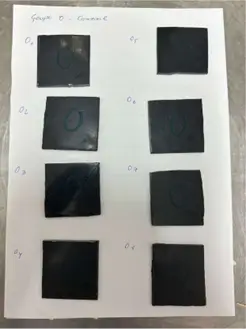
01 / Before exposure
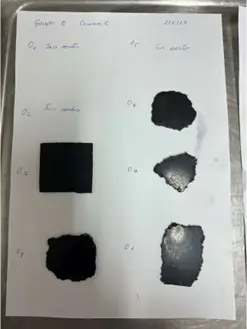
02 /After exposure
Reference samples without additive. Exposure reveals material loss and gnawing marks. Photographs from the study; no comparison between the additives evaluated is shown.
TECHNICAL STUDY / RODENT PROTECTION
Two aspects of the study
Performance
Assessing the material’s response to rodents.
Verification
Analysing the presence of the additive in the finished sheath.
Materials suited to the installation environment
The study compares different sheath additive options and examines their behaviour when exposed to rodents. Its aim is to inform material selection, taking account of the application and the limitations of this type of protection.
Verifying presence and assessing performance
The programme addresses two complementary questions: how the material performs, and how to verify the presence of the additive in the sheath after manufacture. For the performance assessment, Standard CableTeam engaged the Animal Experimentation Service at the University of Córdoba.
The research also examined different approaches to material analysis. The report highlights that ease of detection and performance against rodents are separate criteria. Considering them together provides a sounder basis for selecting an option for the project.
Assessing protection in the complete cable
Repellent additives can help reduce damage, but their effectiveness is limited. Their assessment must therefore be considered alongside that of the cable’s other protective elements, including mechanical protection, and its installation conditions. The presence of an additive does not, by itself, guarantee immunity to rodent damage.
This work reflects Standard CableTeam’s approach to projects: understanding the specific need, comparing alternatives and supporting engineering decisions with testing. Knowledge applied to customers and projects that need to go beyond the standard.