
From Requirement to Evidence in One Week
Beyond Standard Process
STANDARD CABLETEAM · BEYOND STANDARD PROCESS
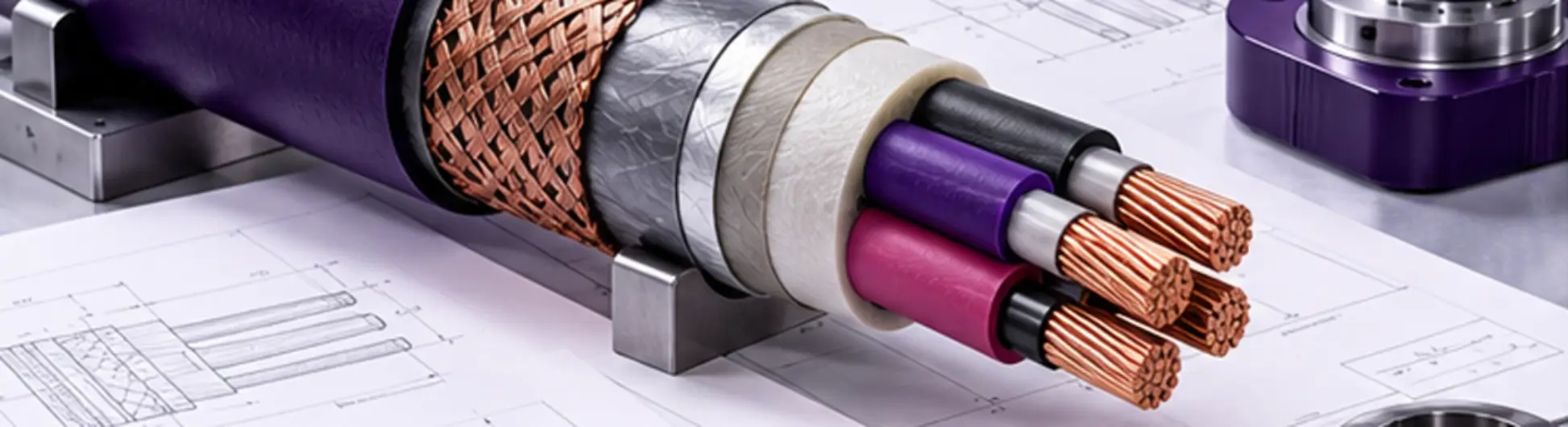
Every specific cable project begins with a question from the customer and must end with a demonstrable answer. Beyond Standard is the process Standard CableTeam uses to navigate that journey: a five-phase structured method that transforms the actual requirements of an application into a cable that is designed, tested, and documented.
The process is designed for applications in which the cable is part of critical infrastructure and there is no room for uncertainty. This section explains what Beyond Standard is, how long it takes, and what happens in each phase.
Requirement
Understand
Matrix
Translate
Design
Build
Testing
Verify
Evidence
Document
What is Standard CableTeam’s Beyond Standard process?
Beyond Standard is the methodology Standard CableTeam uses to develop custom cable solutions for each client, going beyond the standard catalog. It takes a project from requirement to validation in five phases (requirement, matrix, design, testing, and validation), with advanced technical and technological support from our plant in Maliaño (Cantabria).
How long does it take Standard CableTeam to move from requirement to evidence?
The Beyond Standard process is designed to move from requirement to evidence in one week. This is made possible by a structured method, an engineering team that works with the client from day one, and in-house design and testing capabilities.
Beyond Standard Process / 01
Requirement

Every custom cable development project begins with a thorough understanding of the problem. The requirements phase identifies the customer’s challenge, the application context, and the project’s actual requirements, and serves as the foundation upon which the rest of the process is built. Clear requirements from day one save time, prevent redesigns, and reduce technical risk.
The following explains how this phase is approached and what information the customer needs to provide.
What does Standard CableTeam do when a customer requests a custom cable?
We start by listening: to the customer’s challenge, the application context, and the project’s actual requirements, such as the operating environment, regulations, stresses, installation, and expected service life. A clearly understood requirement prevents redesigns and forms the basis of the entire solution.
What information does the customer need to provide?
Simply describe the application and its conditions of use. Our technical team works with the customer to fill in the rest of the necessary details and determine the cable's specifications.
Beyond Standard Process / 02
Matrix
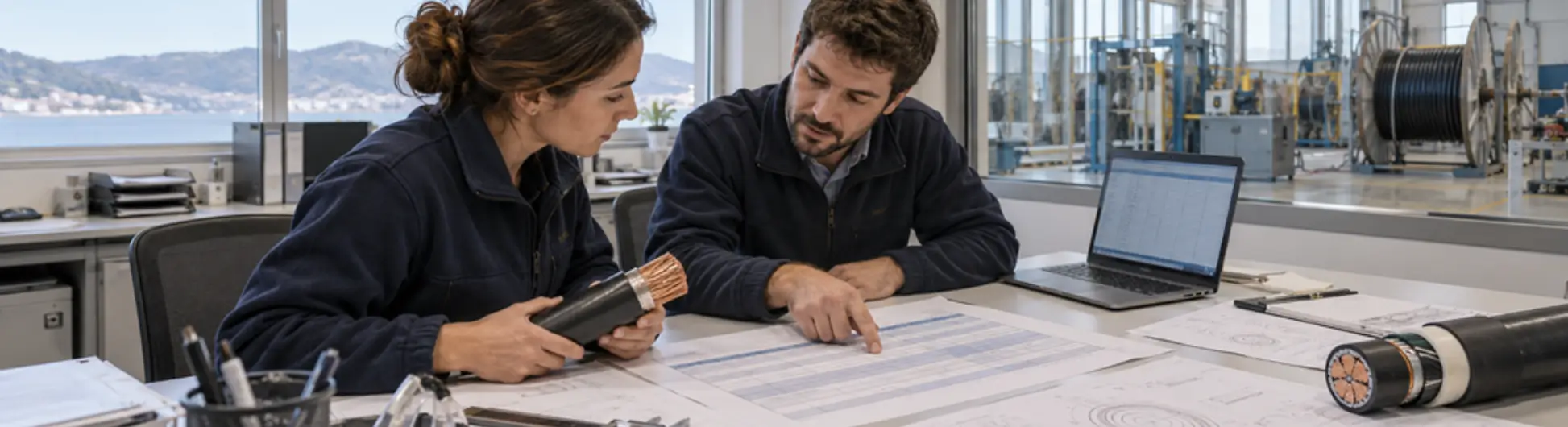
A requirement is only useful when it can be verified. During the matrix phase, the technical team translates each customer need into verifiable technical criteria, each with its own verification method. The matrix thus becomes the reference document shared by engineering, quality, and the customer throughout the entire development process.
The following questions explain what this matrix is and why it is so crucial.
What is the technical requirements matrix in cable development?
It is the translation of each customer requirement into verifiable technical criteria, each with its own verification method. It converts a general expectation, such as “a durable cable,” into specific values that can be designed, tested, and demonstrated.
Why is it important to work with a technical matrix?
It aligns engineering, quality, and the customer from the outset and allows each requirement to be traced back to the final evidence. The result is faster, more objective, and unambiguous development.
Customer Requirements
Verifiable Technical Criteria
Verification Method
Documented Evidence
Beyond Standard Process / 03
Design

Once the technical specifications have been defined, the cable design process begins. During this phase, materials are selected, geometries are defined, and the performance characteristics required for the cable—from the conductor to the jacket—are established. The goal is to create a cable tailored to the specific application that meets the project’s requirements without being oversized or undersized.
The following explains how a custom cable is designed and what advantages it offers over a standard solution.
How does Standard CableTeam design a specific cable?
Based on the technical specifications, we define the cable’s materials, geometries, and performance characteristics: conductors, insulation, jackets, and construction. The design is supported by advanced engineering and our experience in cables for railways and rolling stock, power, oil & gas, and telecommunications.
What are the advantages of a custom cable design over a standard one?
A cable designed for a specific application provides exactly the performance the project requires—neither over-engineered nor under-engineered. It improves reliability, service life, and the total cost of the installation.
Beyond Standard Process / 04
Essay
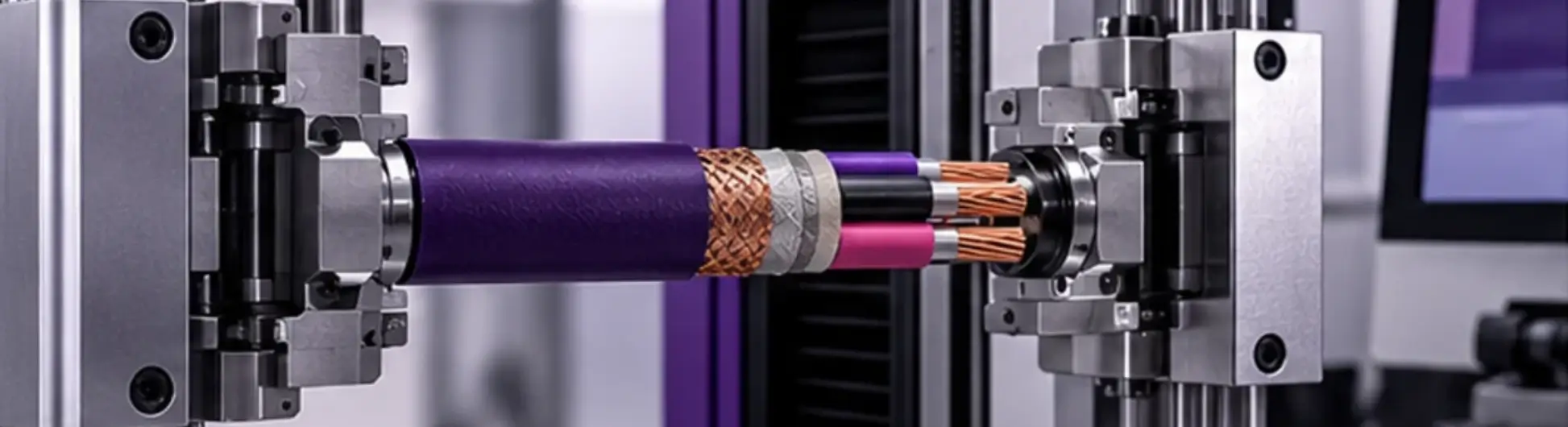
A design is only a solution once it has been proven to work. During the testing phase, solutions are tested under controlled and demanding conditions that simulate the cable’s actual use, and each result is compared against the criteria defined in the technical matrix.
The following questions describe how solutions are tested and why it is important to test them before mass production.
How does Standard CableTeam test its cable solutions?
We test each solution under controlled and demanding conditions that simulate real-world cable use. The tests are conducted on samples manufactured in Maliaño and verify each criterion defined in the technical matrix.
Why conduct testing before moving to mass production?
Because it allows us to detect and correct any deviations before manufacturing, thereby reducing technical risks, lead times, and project costs. The customer moves forward with the certainty that the solution works.
Technical Matrix
Criteria
Design
Materials and Geometries
Testing
Controlled Conditions
Comparison
Result vs. Requirement
Beyond Standard Process / 05
Evidence
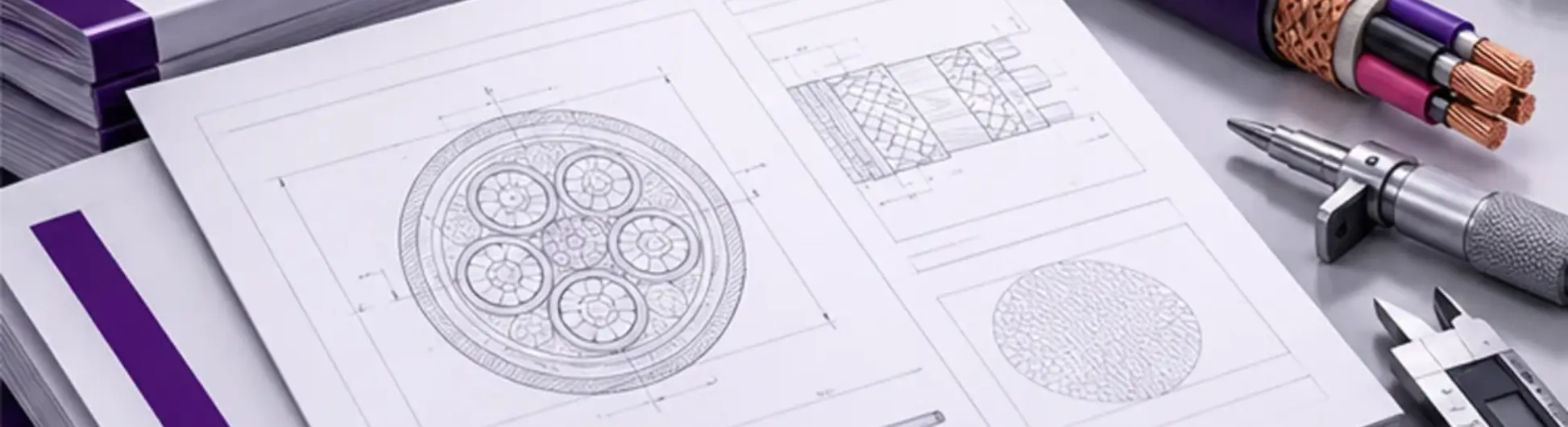
The process ends where the client needs to begin making decisions. The evidence phase compiles and documents the results of the development so that the client can assess, based on objective and traceable data, whether the solution meets the needs of their project.
The following explains what the client receives at the end of the process and why it is so important to make decisions based on technical evidence.
What does the customer receive at the end of the Beyond Standard process?
A documented result: test data cross-referenced against each requirement in the technical matrix. With this evidence, the customer can make an informed and confident decision about whether the solution meets the needs of their project.
Why is it important to make decisions based on technical evidence?
Because it replaces assumptions with objective, traceable data. It facilitates internal client approval, supplier validation, and the transition to production with complete confidence.
Requirement
Origin of the need
Test Data
Verified Results
Customer Decision
Traceable Information